
Christ the King in the 21st Century – really?
We are living in the year 2020, in the time of Corona, Elon Musk, and Netflix. And the Catholic Church celebrates Christ the King – what is that even supposed to mean? Can it get any more medieval?
Personally, I am a huge fan of Christ the King and would like to bring this feast closer to you today, why it is a cool feast and what it is all about. There is only one problem: we know kings from stories, but we can't really do much with a king in real life. Well, there is the Queen – but Jesus as a male Queen and slightly younger still doesn't make sense… The Queen still has a certain representative significance – but not much more. To properly understand Christ the King, we must look at what a king is in the biblical sense.
So let's take a very brief look at the ancient Orient. There, the king serves as a mediator between God and people. In a sense, he represents God and intercedes with Him for the people. In not a few nations, the king was even worshipped as a god himself; just think of the Pharaoh in Egypt (which was, of course, exaggerated and wrong). The king had the task of protecting his people and ensuring their well-being. Now to the people of Israel: they understood themselves as the chosen people – the people of God. Thus, the enemies of Israel, i.e., hostile nations such as the Philistines, were also the enemies of God, and the king had to fight them, as David did, for example.
This image can be very well transferred to Christ: He too is the mediator between God and humans and has the task of protecting the "new Israel," the Church, which consists not only of Jews but of people of all nations, against its greatest enemy. This arch-enemy of the Church, or rather of all humanity, is not another nation, but Satan and sin. That is why Jesus goes into the desert immediately after His baptism to fast and take up the fight with Satan. He defeats him through His vicarious suffering for the sins of all people on the cross. What had injured the sin of humans, their relationship with God, is healed through Jesus' death and resurrection. Peace between God and humans was restored – it only needs to be accepted by humans. Therefore, the first words Jesus says to His disciples after His resurrection are: "Peace be with you." (John 20:19) So that this peace of reconciliation with God may reach as many people as possible, He commissioned the apostles to carry this peace further and to reconcile people with God in His name (John 20:22-23). By the way, priests still do this today in confession…
One might interject now: That is all very nice, but this feast is very outdated – couldn't it be given a more modern name? It might be surprising, but this feast was only introduced in 1925, and for a memorable reason. This period was marked by catastrophes: the First World War had only just ended, the political atmosphere was very tense, and in the East, communism, the worst ideology of the 20th century (whose ideas, by the way, are currently mainstream in the West as well), was spreading. Pope Pius XI saw the reason for these catastrophes in the fact that many people no longer make room for Christ in their lives. Both the greats in politics and individual people in their private lives place their personal desires above the instructions of Jesus. To remind people that Jesus is truly the Lord and that we must not prefer anything to His commandments, this feast was introduced. A truly current thought, I would say!
Personally, I already thought the feast was cool before I could make any sense of the kingship of the Jews, because I knew "The Lord of the Rings" by Tolkien (who, by the way, was a devout Catholic; if you don't know his work, definitely read it or at least watch the movies – brilliant). There, in Aragorn, the leader of all the good forces in the fight against evil, a kingly image is drawn that really corresponds to our biblical image. My personal relationship with Jesus can be described in part as Him being the King of all good forces in the fight against evil – just like Aragorn. And I am a soldier in His army, I have sworn the oath of allegiance (in Latin this is called sacramentum) and serve Him. By His side, I fight for the Kingdom of God, which is a kingdom of love.
There is only one small problem: Aragorn is (caution, spoiler alert) crowned king at the end of the third part. Jesus is crucified at the end – on His head He wears a crown of thorns. This shows us that the kingship of Jesus is fundamentally different from our worldly ideas. It is not characterized by power and wealth, not by pomp and glory. This becomes clear from Pilate's question to Jesus as to whether He was a king. Jesus' answer – You say it, I am a king… yet my kingdom is not of this world – confirms this. His throne is the cross, a crown of thorns His diadem. Radically different.
This Jesus lives today, not only in our thoughts, but He is really present among us, especially in the holy Eucharist and the sacraments. But not only there: as today's daily Gospel reminds us, He is present in every poor and needy person: "Whatever you did for one of the least of these servants of mine, you did for me" (Mt 25:40). Saint Martin, then still a Roman soldier, whom we celebrated recently, showed us what this means concretely: he shared his cloak so that the beggar would not freeze. Whoever serves his neighbor, serves Christ, the King.
Maybe I'm just weird, but I think the feast is brilliant! It's a pity that it cannot be celebrated "normally" this year. But perhaps there is a special opportunity in this: so far, we have always only celebrated "Christ the King." Perhaps this year Christ will truly become our personal King? The invitation is open – it is up to us.
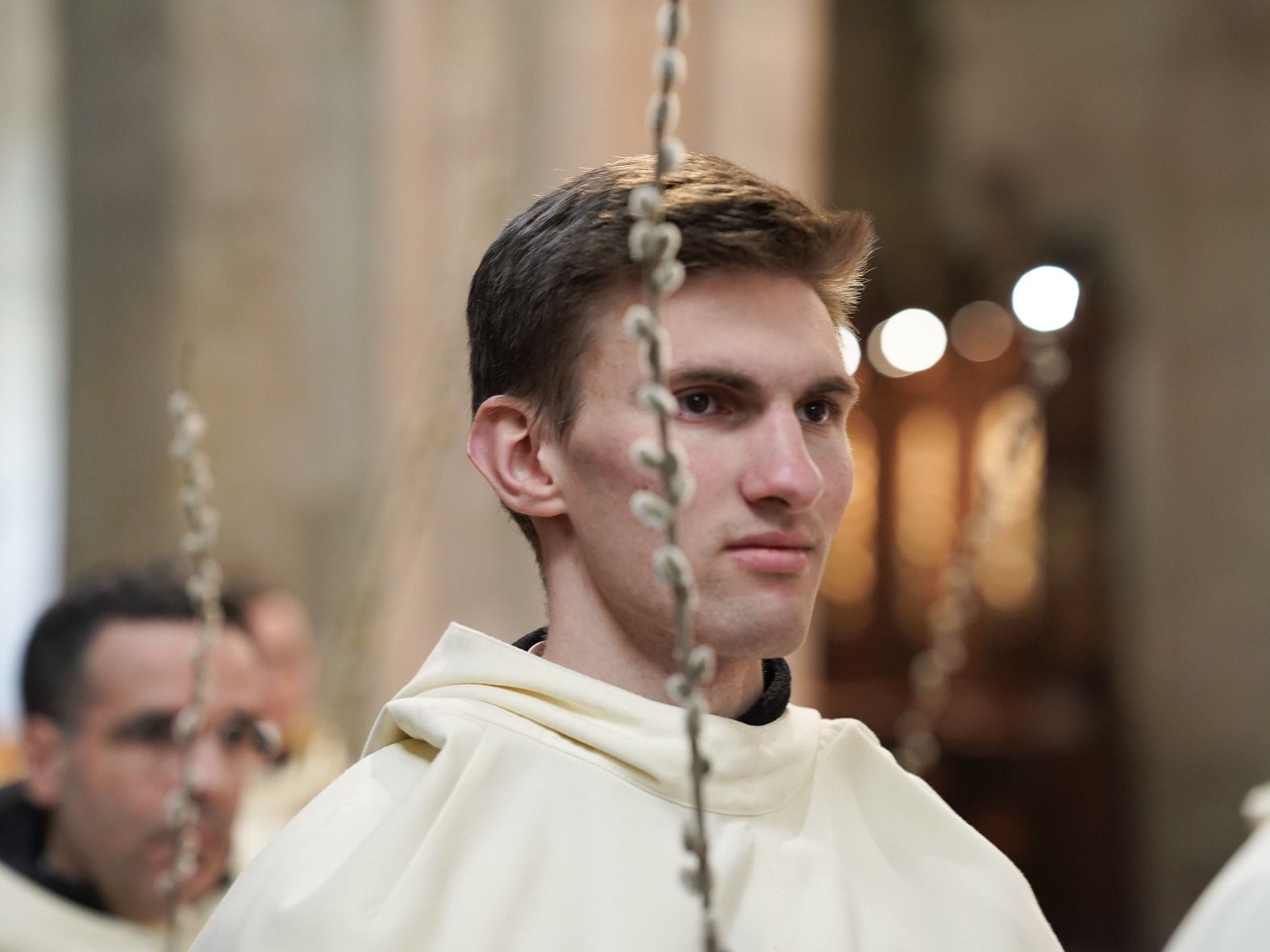
(Author: Willy Mauser, candidate for Stift Heiligenkreuz, theology student at the Philosophisch-Theologische Hochschule Benedikt XVI.)